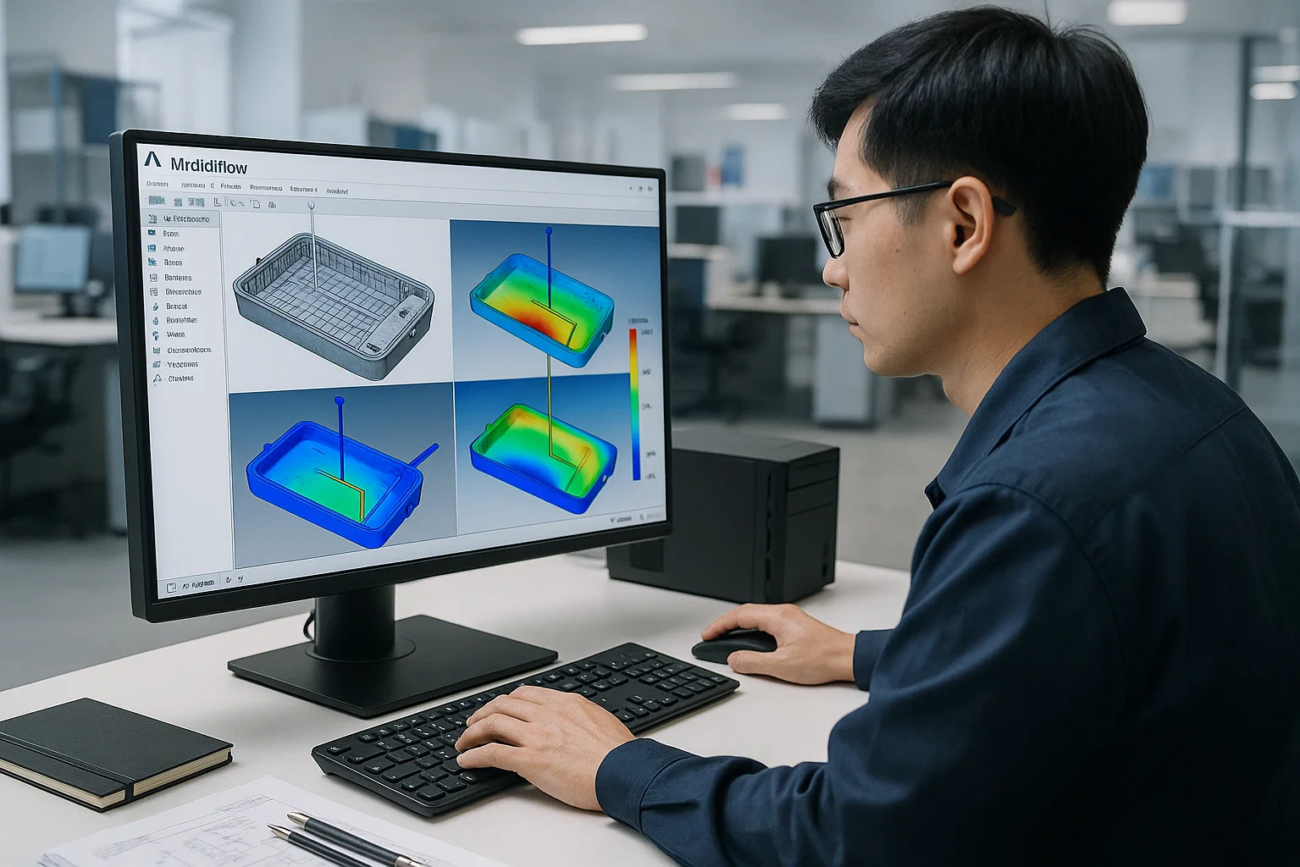
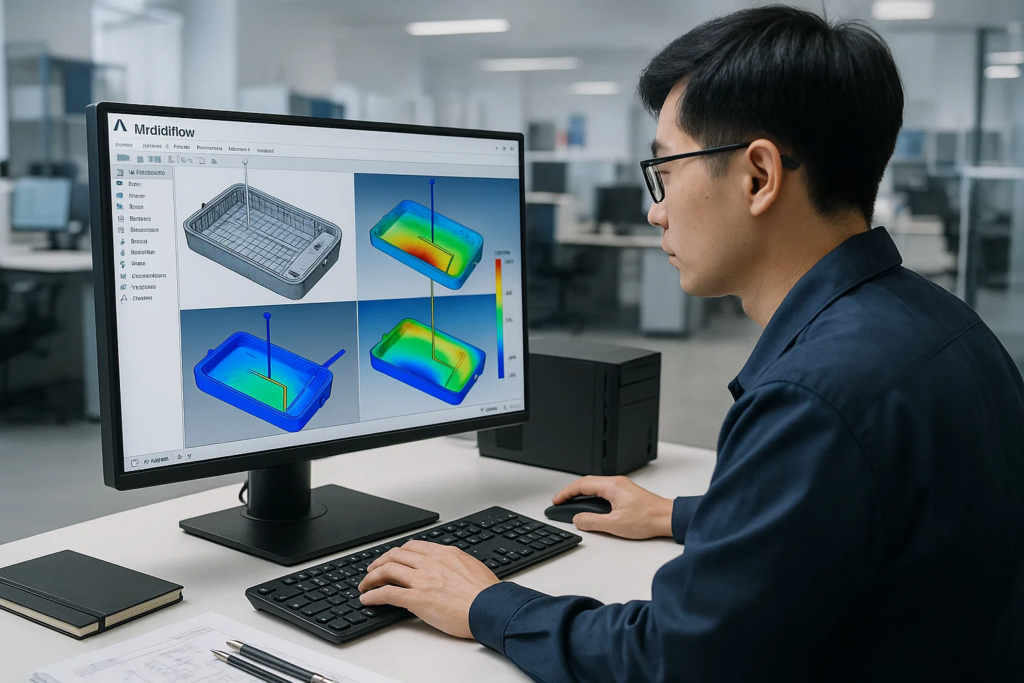
moldflow is a core tool in the field of injection molding simulation and is widely used in product design processes such as automotive parts, electronic casings, home appliance components, connectors, and precision plastic parts. In actual production research and development, Moldflow’s floating license is often used for:
- Filling analysis
- Packing/cooling analysis
- Mold temperature field simulation
- multi-material flow
- Grid construction and repair
- Results evaluation and optimization
Its solver relies heavily on computing resources, the task spans a long time span, and engineers’ operating behaviors are obviously dispersed, making Moldflow’s authorized use status more difficult to predict than ordinary CAD/CAE tools.
Problems often encountered by businesses include:
- Solving tasks suddenly piled up in large numbers
- Licenses are fully occupied during peak periods
- Some analyzes take up licenses for a long time
- Unable to judge the use of modules (Insight, Synergy, Advanced)
- Engineers often cannot start analysis immediately
- The source of resource consumption is difficult to trace
The role of Nodexel is to allow enterprises to visually grasp Moldflow’s authorized usage and real load structure.
1. Why are Moldflow licenses easily “robbed” in enterprise environments?
Moldflow’s resource sensitivity comes from the solving characteristics of its software:
1. Analysis tasks belong to “long-cycle calculations”
Whether it is filling, holding pressure, cooling or warpage analysis, it requires:
- A lot of computing time
- Continuous use of solution license
- The more complex the model, the longer it will take
This results in the license being locked for a long time.
2. The modules are highly differentiated, and different teams occupy different Features
For example:
- Moldflow Insight: Used for complex injection molding simulation, most easily occupied
- Moldflow Synergy: Mesh generation, pre- and post-processing
- Moldflow Adviser:Quick Assessment Tool
It is often difficult for enterprises to tell “which module is used up.”
3. The behavior of submitting tasks during peak hours is highly concentrated
Common scenarios:
- Engineers concentrated on submitting solutions in the morning
- Conduct extensive simulations before design review
- Centralized analysis before project nodes
- Engineering drawings, DFM, and mold flow analysis are promoted simultaneously
As a result, the authorization pool is instantly full.
4. Empty occupation and suspended tasks are common
For example:
- Synergy does not close after solving
- Model is open but not running
- Grid processing takes too long
- Engineers away from work resulting in long license hold
These situations can easily waste a lot of Moldflow resources.
2. Nodexel: Let enterprises see Moldflow’s real authorization dynamics for the first time
Nodexel can provide complete visual monitoring capabilities after connecting to Moldflow’s FlexLM authorization server.
1. Real-time display of Moldflow’s authorization usage
Includes:
- Users currently using the software
- Occupied modules (Insight / Synergy / Adviser)
- Use start time
- Solver time spent
- Number of remaining and occupied licenses
- Has the peak peaked?
This allows administrators and engineering leads to instantly see:
“Who, at what stage, used the authorization?”
2. Solve the task curve and load trend graph
Nodexel will record changes every minute, such as:
- Insight solver load curve
- Synergy Grid Processing Occupancy Trends
- Peak usage of Adviser
- Find the average duration of a task
- Load distribution for different projects
Helps determine exactly where the bottleneck is.
3. Insights into licensing competition during multi-project parallel simulation
In an enterprise, multiple teams share the Moldflow authorization pool:
- Mold design team
- Product R&D Team
- Materials Engineering Team
- CAE Simulation Team
Nodexel can display:
- Occupancy ratio of each team
- Which projects are being solved
- Which tasks cause the authorization pool to become tight?
- Does multi-team competition exist structurally?
Enterprises no longer judge “the license is not enough” based on their feelings.
3. How does Nodexel help the engineering team improve efficiency in the Moldflow solution scenario?
Scenario 1: The Insight solver is full for a long time and new tasks cannot be submitted.
Nodexel can display:
- Running solving task
- How long does each task take?
- Is there a stuck solution?
- Whether the large model results in extremely long calculation time
Managers can judge based on this:
- Whether the solution schedule should be adjusted
- Whether computing resources should be allocated
- Whether abnormal occupancy should be identified
Scenario 2: Synergy grid processing consumes a large number of licenses, causing resource preemption
Nodexel can monitor:
- Grid processing module usage
- The time period during which engineers batch process meshes
- Is there a session that has not been closed for a long time?
Help enterprises control “human resource waste”.
Scenario 3: Authorization shortage occurs before a critical project node
Nodexel’s trend chart can show:
- Resource pressure caused by recent projects
- Which teams are peak contributors
- Do you need to temporarily adjust resources?
Allow management to make scheduling arrangements in advance.
4. Lightweight idle license recycling strategy
During peak periods set by the enterprise, Nodexel can Moldflow empty licenses that have been inactive for a long time will be gently recycled., does not interfere with running solution tasks, and only prevents resources from being meaninglessly occupied.
5. From invisible to manageable: building the data system used by Moldflow
After using Nodexel, enterprises can obtain complete Moldflow usage data:
- Insight / Synergy / Adviser occupancy structure
- Solver duration distribution
- Peak period occupancy data and sources
- Resource proportion of each team/project
- Abnormal occupancy
- Is module expansion necessary?
- Full year trend forecast
This data can be used for:
- Annual budget and authorization planning
- Solve schedule optimization
- Cross-department coordination
- CAE team resource management
- Material/mold project node planning
Let Moldflow authorization change from a “black box” to an auditable, planable, and manageable engineering resource.
Conclusion
Moldflow is an extremely critical tool in injection molding simulation, but its authorization behavior has long been opaque, resulting in frequent competition for resources, serious solution queues, and limited team collaboration efficiency. Nodexel enables enterprises to understand the real usage of Moldflow through real-time monitoring, module occupancy analysis, project usage insights and lightweight resource recycling, providing a more stable and predictable environment for simulation teams.
