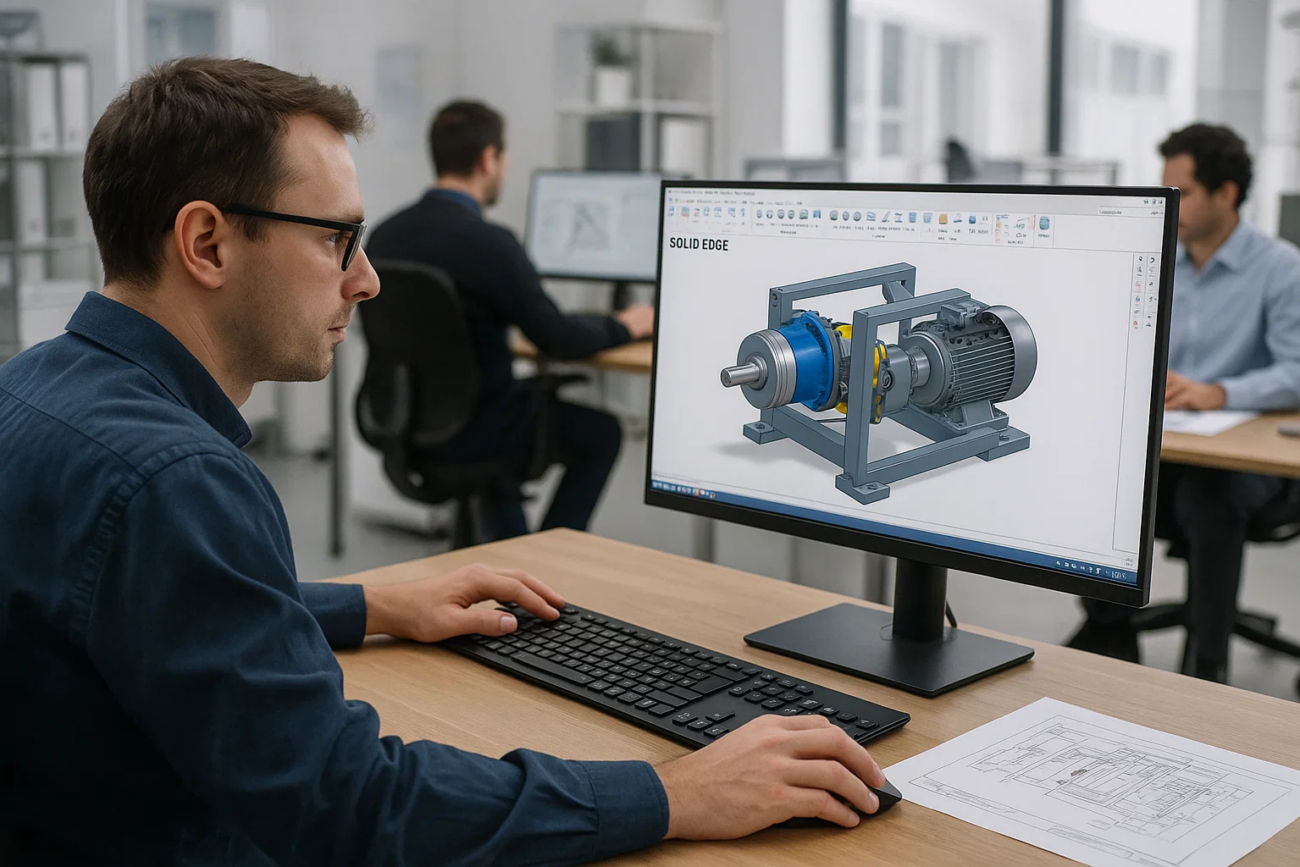
as a comprehensive CAD tool for mechanical design, assembly modeling, engineering drawings, simulation and manufacturing, Solid Edge is widely used in manufacturing, equipment industry, mechanical parts development and other fields. As the team scales and the development pace accelerates, Solid Edge’s floating license often becomes a key resource that cannot be ignored in the design process. However, it is also the most overlooked area – it is difficult for enterprises to accurately understand their real-time occupancy, peak load, inter-departmental competition and resource waste.
The role of Nodexel is to allow the use of Solid Edge within the enterprise to be completely and clearly presented for the first time.
1. Typical usage characteristics of Solid Edge in enterprises: high frequency and scattered
Compared with other 3D software, the usage habits of Solid Edge are significantly different:
1. High frequency of use and fragmented calling behavior
Engineers do in Solid Edge:
- Part modeling
- Assembly inspection
- Engineering drawing modification
- Version comparison
- Small simulation calculation
These operations are typically frequent and last most of the day, so the authorization pool fluctuates significantly.
2. Many departments and roles share the same authorization pool
Solid Edge is often used by multiple departments, such as:
- Mechanical R&D Department
- Process Engineering Department
- Tooling and fixture design
- Supply chain technical support department
- Quality Engineering Team
The usage behavior of each department is different, resulting in irregular peak changes in the authorization pool.
3. Peaks are concentrated and easily overlooked
Enterprises often use Solid Edge intensively during the following periods:
- 9:00–11:00 a.m.
- 14:00–16:30 pm
These peaks often cause the license to be filled up instantly, and engineers cannot open the software and can only wait.
4. Common “empty occupation” problems
Including but not limited to:
- The engineer left briefly without closing the software
- The background process does not release the license normally
- The drawing is open for a long time without any operation.
These may cause the Solid Edge floating license to be occupied for a long time and increase competition for resources within the team.
2. Nodexel: Build a visual real-time license monitoring system for Solid Edge
Nodexel provides a complete monitoring framework by connecting to Solid Edge’s floating authorization server (such as FlexNet/FlexLM or Siemens authorization mechanism), giving enterprises a clear view of all usage.
1. Real-time display of all license occupancy status
Includes:
- Users currently using Solid Edge
- Duration of use, source of occupation
- Whether it belongs to parts modeling, assembly, engineering drawing and other scenarios
- Number of remaining and occupied licenses
- Real-time load conditions during peak hours
This data is presented graphically, allowing managers to immediately see if the authorization pool is under stress.
2. Automatically record time series data and fluctuation trends
Nodexel continuously collects minute-by-minute licensing changes and generates:
- Use curves
- Load peak graph
- Module-level trend charts (such as Part / Assembly / Draft)
- Weekly/quarterly usage statistics
This data can be used to determine long-term changes in demand for Solid Edge.
3. Typical enterprise usage scenarios: How Nodexel brings engineering value
Scenario 1: Solid Edge is frequently occupied during morning peak hours
Nodexel will show:
- Specifically which users are occupying
- Which department caused the peak?
- How long did the peak last?
- Whether there are unreleased empty occupation licenses
Enterprises can formulate reasonable design specifications or optimize the pace of collaboration based on this.
Scenario 2: The occupancy of the assembly design team is much higher than that of other modules
With module-differentiated views, management can see:
- Differences in proportions of parts modeling, assembly, and engineering drawings
- Differences in load on modules between departments
- The relationship between project cycle and module pressure
This information helps with resource allocation and process planning.
Scenario 3: Multiple business teams share the same authorization pool, leading to resource competition
Nodexel provides:
- Usage statistics by department/project/region
- Long-term share trend
- Using structure reports
Let enterprises no longer rely on subjective feelings, but conduct authorization management based on data.
Scenario 4: Solid Edge usage surges but engineering manager can’t figure out why
Nodexel’s history log can be traced:
- user behavior
- Project peak
- Unusual usage patterns
- Permit occupancy habits
It is engineering data that can truly be used for problem diagnosis.
4. Lightweight idle license recycling strategy
During the peak period of enterprise customization, Nodexel can Empty sessions that have been inactive for a long time are gently recycled, to avoid licenses being meaninglessly locked, but will not affect engineers who are doing modeling or engineering drawing processing.
5. Build a data-based Solid Edge usage system: from “feeling” to “foundation”
After joining Nodexel, enterprises can obtain a complete Solid Edge data system:
- Actual usage load
- Proportion of each department/project
- Module level usage distribution
- peak pressure source
- Empty occupation ratio
- Annual Trend Forecast
- Is expansion necessary and how much?
This information is useful for:
- design manager
- IT operations team
- Management
All have real value. Solid Edge usage no longer relies on verbal feedback from engineers but instead makes decisions based on data.
Conclusion
Solid Edge is the core tool of the enterprise’s 3D design chain, but its authorized use status has been invisible for a long time. Nodexel’s monitoring framework enables enterprises for the first time to Visual, traceable, analyzable in order to understand its internal usage structure, it can reduce license contention, reduce space occupation waste, improve team collaboration efficiency, and provide a solid data foundation for resource planning.
