1. Industry background: Current usage status and common management gaps of META in the field of enterprise CAE
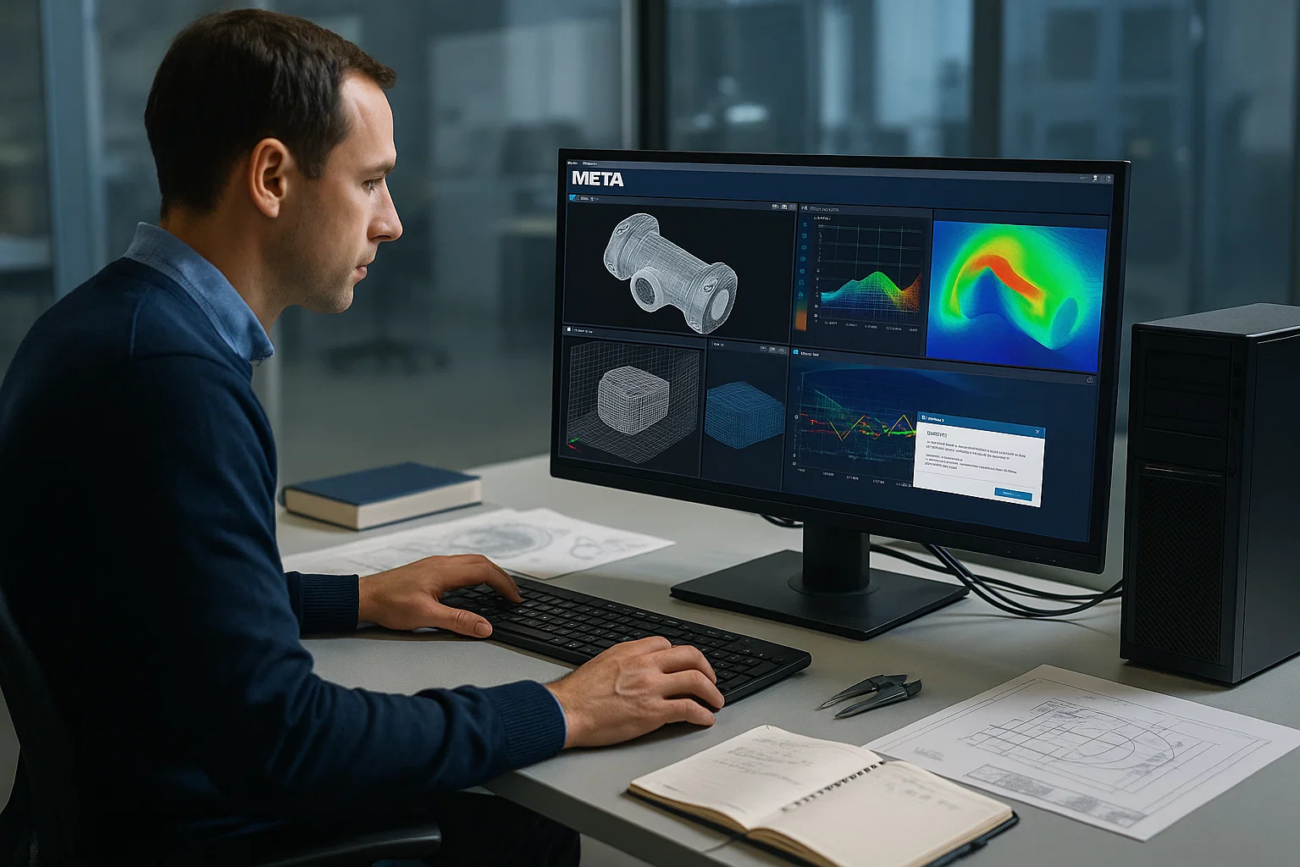
in industries such as automobiles, aerospace, electronics, and rail transportation, CAE has become a key link in design verification, and META as the main post-processing software, it is used by engineers to:
- View mesh results generated by ANSA or other preprocessing
- Analyze simulation output such as structure, collision, NVH, CFD, etc.
- Execute batch post-processing script
- Create reports, curves, clouds
- Check models and verify simulation data quality
In the actual enterprise environment, META has the following typical usage characteristics:
- Open and use for a long time(Especially during crash/NVH post-processing)
- Permits occupied by batch post-processing tasks are not released
- Multiple CAE projects are carried out in the same cycle, and the loads are highly superimposed
- Engineers will frequently switch between different solution result files, causing the license to continue to be occupied.
However, due to the lack of real-time monitoring methods, companies often encounter:
- Software startup prompts “No license available”
- I don’t know which engineer is occupying all the resources.
- Some clients idle for a long time occupying licenses
- Resource conflicts occur during peak periods, causing project delays
- Management is unable to understand true usage peaks, trends and departmental needs
These problems make META’s authorization pool a “black box resource” in the CAE process, which is both critical and uncontrollable.
2. Typical challenges faced by enterprises in META usage management
From both a technical and management perspective, the company’s pain points are very clear:
[Pain points from a technical perspective]
- Floating licenses are often filled Especially when a large number of simulation results are released (such as batch solution of collision conditions is completed).
- No way to know who is using META in real time Engineers need to ask colleagues one by one or contact IT to troubleshoot.
- The user opens the software but does not operate it (Idle) and occupies the license. Switching to Excel, meetings, viewing documents, etc. during post-processing is very common.
- CPU-intensive post-processing results in long license lockup In the case of large result files, the license may be occupied for several hours.
- Batch execution of post-processing scripts results in “invisible occupation” An engineer may forget to close the script window and the license remains occupied.
[Pain points from a management perspective]
- Lacking real usage data, licensing planning can only rely on guesswork
- Conflicts were serious during the peak period of the project, but the source and responsible department could not be determined.
- Difficult to determine whether expanded META license is needed
- Multiple technical centers are used separately, and there is a lack of unified view of authorization distribution and peak situations.
- Unable to identify abnormal usage (such as weekend residues and dead processes)
These problems lead to low efficiency in enterprise CAE resource management and lack of basis for budget planning.
3. How Nodexel intervenes to build META’s enterprise-level usage management system
Without changing META’s original authorization method or modifying engineers’ usage habits, Nodexel builds a visual real-time monitoring layer for META.
1. Monitor META’s license occupancy in real time
nodexel can display in real time:
- Which users are currently using META
- How many authorizations are occupied
- Length of use
- Active state vs Idle state
- Remaining quantity of authorization pool
- Trends about to peak
Management can quickly determine the real-time usage pressure of META.
2. Identify active/idle users (Idle Detection)
Nodexel will automatically monitor whether the engineer is:
- Actual post-processing
- No mouse/keyboard operation for a long time
- The software is opened but no data is processed
Idle sessions are clearly marked in the interface to help reduce invalid usage.
3. Automatically identify abnormal occupancy and support gentle recycling
For example:
- Post-processing script is not closed
- Residual background programs
- META closed but process not released
Nodexel can target No operation for a long time the sessions are gently recycled without interfering with the tasks that engineers are running.
4. Statistics of usage time by department, project, and region
For example:
- NVH group usage proportion
- Peak Cycle for Collision Teams
- Is there a long-term Idle condition for the CFD team?
- Usage trends of overseas CAE centers
Help management fully understand META’s resource structure.
5. Visualized trends in peak and trough periods
Includes:
- Usage load curve within one week
- Authorization pressure corresponding to the project cycle
- Daily morning and evening peak distribution
- Concentrated period for post-processing tasks submitted by each team
This data allows companies to truly Based on facts rather than subjective feelings to plan resources.
6. Unified management of META usage across regions and multiple teams
Either:
- Domestic headquarters
- Overseas Engineering Center
- Supplier technical team
Nodexel can uniformly monitor the authorization status of META.
4. Direct benefits brought by data insights
After introducing Nodexel, enterprises can obtain obvious quantifiable benefits from the use of META:
1. Increase license utilization by 20%–40%
After reducing invalid occupancy and idle occupancy, authorization can truly be used for “real work”.
2. Reduce idle occupancy by 30%–60%
Significantly fewer engineers forget to exit META.
3. Engineers spend less time waiting in line for permits
The success rate of activating META during the peak period is significantly improved.
4. Authorized procurement is more accurate
No longer rely on subjective judgments of “what you hear or hear is not enough”, but based on actual data.
5. Improvement of overall project delivery efficiency
Post-processing bottlenecks are reduced and CAE result evaluation becomes smoother.
5. Real usage scenarios by engineers
The collision simulation team of an automobile company gathered the results on Friday morning, and solved more than a dozen working conditions at the same time. Engineer Xiao Zhang was about to use META to view the cloud image, but he was prompted:
“No Available License”
He asked colleagues and contacted IT, but no one knew whether it was a script that hung up or an engineer who was idle.
After enabling Nodexel, the situation is immediately clear:
- 3 engineers idle for more than 120 minutes
- META processes that have not been shut down for two weekends still occupy authorizations
- Concentration of submissions for collision conditions leads to short-term peaks
- The NVH department also processes large results files post-concurrency
The manager quickly notified the relevant engineers to release the idle occupation, and the authorization pool instantly released 4 resources. Xiao Zhang successfully opened META and completed the post-processing task.
This story is not a special case, but the most common daily routine of enterprise CAE teams—— It’s just that no one knew where the problem was before.
6. Summary: Make META use visible, controllable, and predictable
META undertakes key post-processing tasks in the CAE link, but its authorized use is often in a “black box state”. The value of Nodexel does not lie in hyperbole, but in:
- Build a layer of “transparent data monitoring capabilities”
- Allow managers to truly see the usage structure of META clearly for the first time
- Help enterprises reduce resource waste
- Optimize CAE working links
- Increase your engineering software ROI
- Support digitalization and modernization of project management
When META usage is quantified and visualized, only then can enterprises transform CAE resources from “management by feeling” to “accurate decision-making based on data.”
