Due to business expansion and insufficient budget, many companies will encounter difficult cost control problems.
Hexagon, the parent company of Adams Software, has begun to promote the transformation of subscription-based licensing in recent years, which has inadvertently brought new cost pressures.
What are the sources of Adams license cost pressure?
- Resources are tight during peak hours
When multiple projects are carried out in parallel and teams submit simulation tasks together, licenses are “difficult to queue up and cannot be obtained”, and the project progress is delayed.
- Uneven distribution of resources and low utilization
Some users/user groups occupy licenses and appear idle during work, causing the licenses to be occupied for much longer than actually required. License usage is low, increasing unnecessary procurement costs.
- l Operation and maintenance pressure is high, and decision-making lacks data basis
Traditional manual management is difficult to grasp the license usage status of each team in real time, cannot flexibly schedule according to business priorities, and budget and asset planning lack accurate data support.
Traditional security practices: Where they fall short
Some companies will choose not to switch to a subscription system and reduce the frequency of purchasing maintenance services to reduce software license cost pressure. The effect is undoubtedly immediate, but once the company’s future development is considered, it cannot solve the waiting phenomenon that occurs when employees face insufficient licenses, and they can no longer use Adams’ new features, affecting work efficiency. Even if the purchase of maintenance services is resumed later, it will also bring about a sharp increase in budget pressure.
Some companies will choose to rent temporary licenses provided by suppliers or licenses from the license pool of sister companies, regardless of compliance with licensing rules. This method will also bring additional costs and add additional processes, thus affecting efficiency.
Solution: Use Nodexel to significantly alleviate licensing resource constraints
Nodexel can play a vital role in alleviating the license shortage problem, bringing an unprecedented resource utilization experience to Adams users:
- Real-time monitoring and multi-dimensional analysis: transparent dosage and scientific distribution
Using a visual dashboard to view historical and real-time data, management can check the Adams license usage of each department and member at any time, and promptly discover idle or abnormal resource usage.
- Automatic release and early warning mechanism: eliminate waste caused by idleness
The system can collect and analyze license usage data, quickly identify idle license resources and automatically reallocate them immediately to ensure the liquidity of license resources.
At the same time, there are built-in intelligent early warnings to remind managers to intervene and adjust in a timely manner in response to abnormal occupancy, high-frequency applications, etc.
- Intelligent scheduling: prioritize core tasks and dynamically transfer resources
Nodexel uses a unique algorithm, combined with a custom scheduling strategy, to automatically identify high-priority simulation tasks and key project links, giving priority to ensuring that they obtain the Adams license to avoid bottlenecks that slow down the progress of the main line.
Actual benefits: Simulation efficiency and asset value are both improved
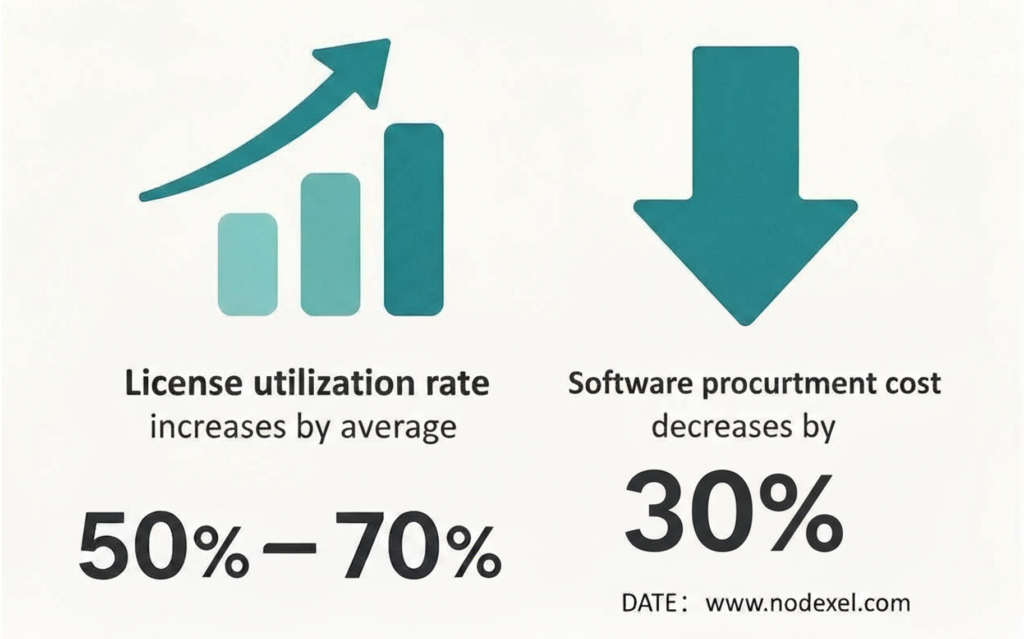
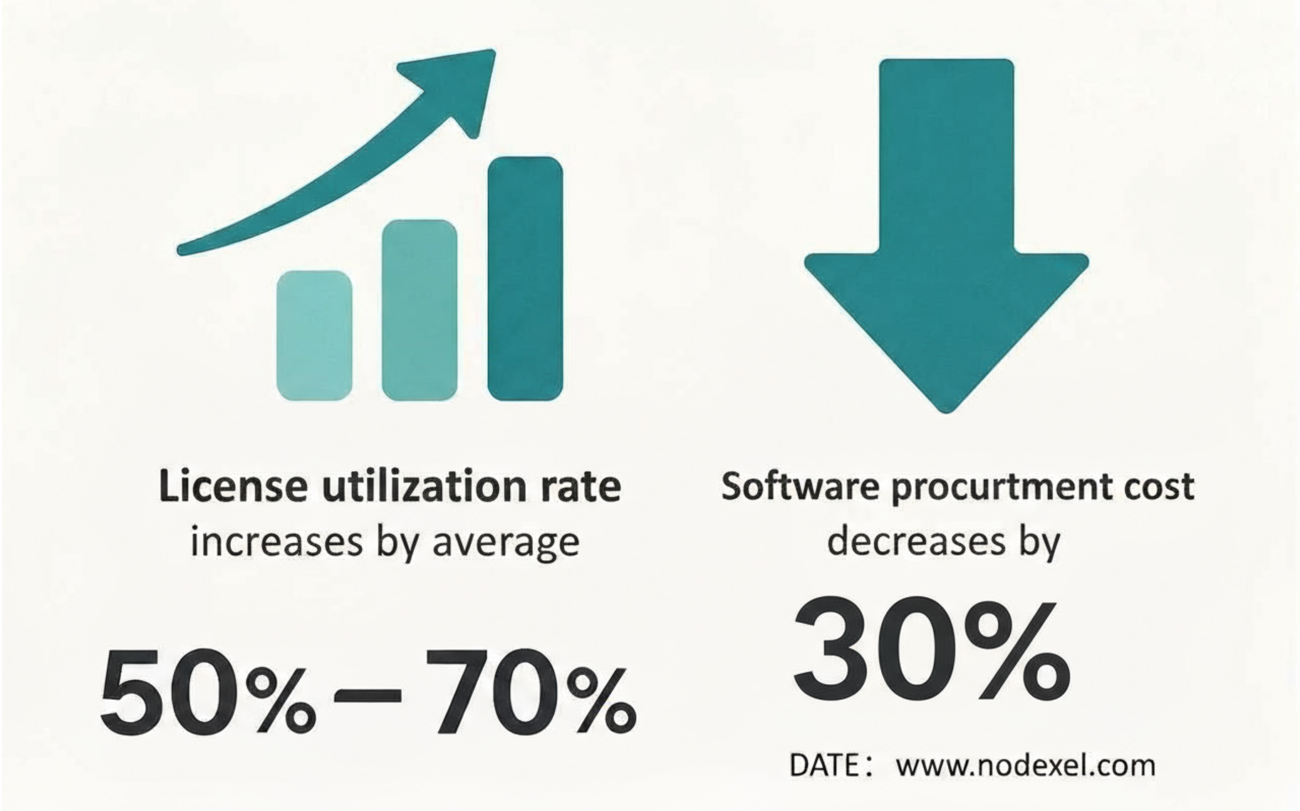
After adopting Nodexel, enterprise Adams license usage efficiency has increased by 50% to 70% on average, software procurement costs have been reduced by more than 30%, project simulation queue time has been significantly shortened, and the overall research and development cycle has been accelerated. Management can clearly evaluate the return on software investment and scientifically plan future asset allocation.
